Quality Over Quantity

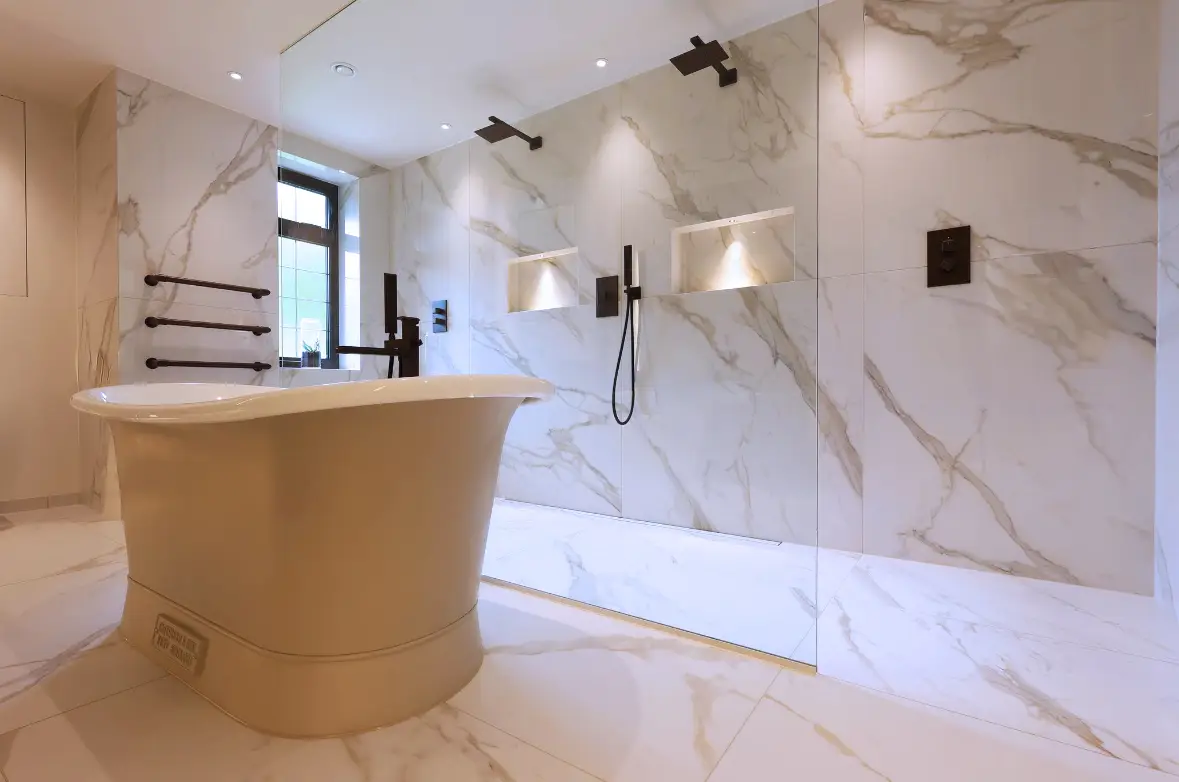
Incredible bathroom fitted inside a prime residential new build in Sevenoaks by Taylor Kings Construction

It’s Sunday afternoon, I’m sitting drinking a coffee and pondering over Taylor Kings’ marketing strategy, which leads me to think about the correlation between social media, quality brands and quality products in today’s world.

Let’s start with social media… It’s fairly common knowledge that Instagram rewards consistency in a desperate attempt to feed the addiction so many of us share. After a quick bit of research online, the figures seem staggering – a recent study by Buffer (completed just last week), says that essentially posting 3-5 times per week can double your following, and 6-9 will push it even further – as long as you are also prepared to post a Story every day of course! I challenge anyone to try posting around 14-16 times a week, whilst retaining any real quality or value without it getting bloody boring.

So, what about brands? Take BMW for example, an undoubtedly great brand, but it’s widely accepted that they make some average cars these days. It’s not because it doesn’t make great cars, because it does – anyone who has experienced some of the latest M Series variants will tell you. It is because they feel they need to make so many different models in today’s market. Forty-two models are currently available, and that is why it is impossible to continue to bring out the best possible product over the whole range. How many models does Rolls Royce currently produce? Six. Bentley? Just eight. And you won’t find many people saying any of them are average.

And this is what separates Prime Residential construction from the rest of the pack. Quality construction firms understand their capacity and that there is a limited number of skilled professionals and project managers, and an even shorter supply of talented craftsmen to deliver at the highest level. Take on one too many projects or overstretch the team even by the smallest of margins and quality will only go one way, fast. Just look at the state of the national housebuilders. This is the very reason why we believe that you should select a builder based on their ability to focus on your project and deliver you quality over quantity.

For as long as we are focused on the Prime Residential market, Taylor Kings won’t be trying to grow into a ‘large’ construction firm working on more than a very select number of projects – and we certainly won’t be over-posting poor value, poor quality content which doesn’t align with our brand simply to gain ‘followers’.

Jeremy

Our post-construction phase framework.

  • Deep Cleaning – We employ professional cleaners who understand the importance of the products they are using and the methods they adopt.
  • Completion inspections – We go over every inch of the project to ensure that the work meets our incredibly high expectations.
  • Submission of Certification – We submit all certification to the building inspector/s to achieve project completion.
  • Handover – We carry out a full walk-through with our clients so that they can be shown the operations of all new equipment.
  • Operations & Maintenance Manual – We assemble and present a full O&M folder with guides for any new systems and care instructions.
  • Documentation Pack – Alongside the O&M manual, we assemble a documentation pack for any work completed which includes as-built drawings, service mark-ups, specification packs and relevant certifications.
  • Contacts Directory – Beyond being the main point of contact, we also form a comprehensive list of contacts which have worked on the project.
  • 12 Month Rectification Visit – As standard on any project, we always return after 12 months to carry out any snagging.
  • Ongoing support – We are there for our existing clients, long after completion. From handyman tasks to full maintenance plans, we offer a level of service which is not offered to the wider public.

Our construction phase framework.

  • Internal Inspections – There are a host of inspections to be completed and recorded on a daily and weekly basis. From welfare facilities, tidiness and security to major safety considerations such as scaffolding – our site agents use a centralised mobile application, where we have created bespoke templates to follow and track all of the inspections.
  • External Inspection – We organise and fulfil compliance inspections from building and warranty inspectors and our third-party health and safety inspector.
  • Meetings – We hold official weekly site meetings for the project team and all parties which are affected the current or imminent programme. We also hold official progress meetings, normally on a monthly frequency, with the clients and wider project team.
  • Reviews – We constantly review and tweak all of the various pre-construction project plans and main programme, issuing any changes to the project team and client.
  • Quality Control – Anyone working on our sites knows the exceptional standards we expect, but we still remain vigilant and ensure that the standards are met in every detail.
  • Information Collation – we collate and present all building control inspections, product warranties, operating and maintenance records and start to form the post-completion documentation.

Our pre-construction framework.

  • Define the Project Scope – We sit down and evaluate the drawings, technical specifications and information schedules before setting out clear project objectives, deliverables, a breakdown of key components and a list of possible conflicts.
  • Set a Project Programme – using the agreed scope, we layout a project programme. We do this using GANTT chart software which is a tool to visualise and rationalize time scales.
  • Form a Cost Management plan – we use the costing documents and project programme to estimate financial forecasts.
  • Form a Risk Management plan – we seek to find, highlight and plan for any items which may create risk to the programme or budget.
  • Form a Health and Safety plan – this is an extension of our Construction Phase Plans and highlights our use of developed Risk and Method Statements.
  • Create a communication plan – how we inform any external parties like neighbours of work that may affect them, we look at setting on/off site meeting frequencies, expectations for the transfer of information in RFI’s (requests for information), completion of various Registers and form a centralised shared information hub.
  • Form a Procurement Plan – We assess the lead times of all proposed materials and trades and map these against the project programme to highlight any risks to the programme. 
  • Highlight Quality Concerns – we review the selected materials and specifications to assess any areas which will need careful quality control to meet our high expectations.

Our compliance commitments:

  • Qualified and competent personnel for every role, including Site Manager.
  • Safety Training Scheme (SMSTS) qualified site agents.
  • Dedicated Construction Phase Plans.
  • Fully developed Risk Assessments and Method Statements (RAMS).
  • Thorough Fire Control and Emergency Plans.
  • Detailed site inductions for all personnel and visitors.
  • Correct and clear site signage and first aid stations.
  • Regular inspections and maintenance of all plant and equipment by qualified third party inspectors (LOLER).
  • Daily inspections of plant and equipment.
  • Regular site inspection audits by a third party health & safety consultant.